



IMOPORTANT: The PCS/Nutrien mine is CLOSED to fossil collecting. Please DO NOT call the mine or museum asking to fossil collect.

Aurora and Coastal North Carolina
Fossil Hunting Guide to North Carolina - Including Aurora, NC
Aurora, NC
Roughly 18-22 and 2.5-5 Million Years Old
Early Miocene and Pliocene
Pungo River and Yorktown Formations
Early Miocene and Pliocene
Pungo River and Yorktown Formations
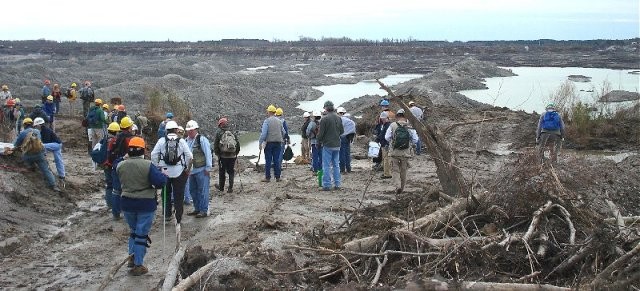
Collecting guides discussing the fossil collecting area in the mine, when thet mine was open.
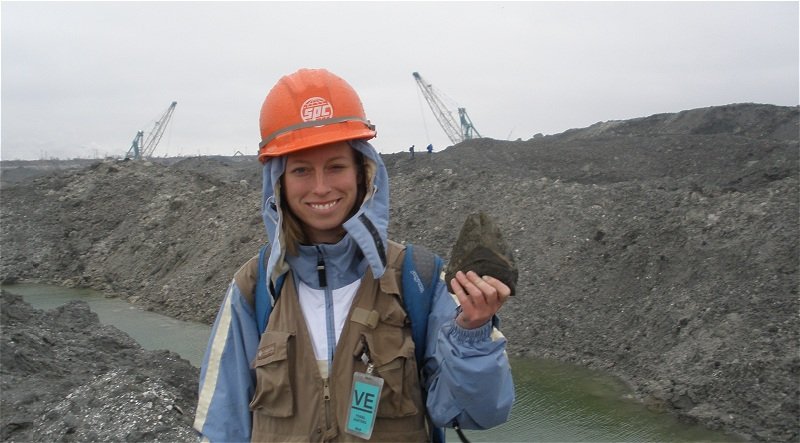
The megalodon find of the day, a giant 6" megalodon tooth. It's 6" even with the chipped off part
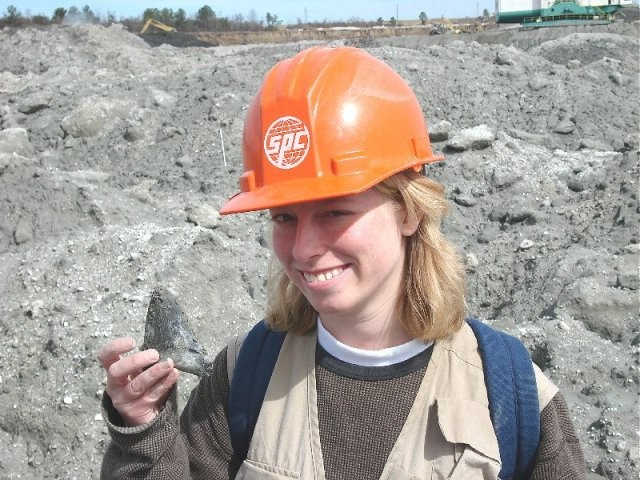
A find of the day, a 4 5/8 inch megalodon tooth. Don't mind the oversized hard hat!
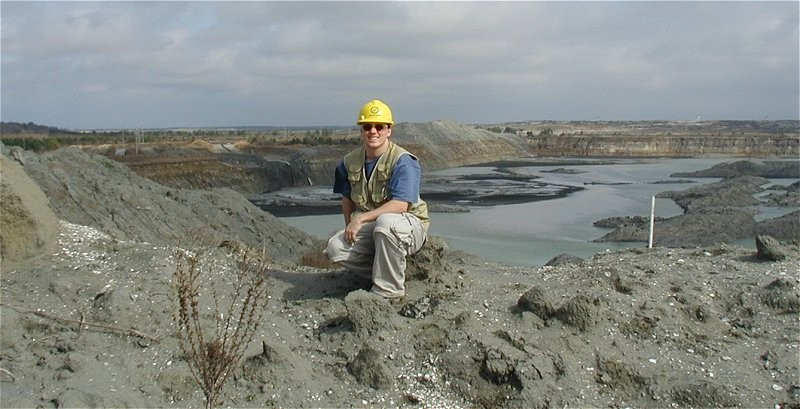
Fossil Hunting at Aurora, North Carolina
About the Aurora Area in North Carolina
Aurora, NC is a quiet town just south of the Pamlico River in rural North Carolina. It has a population of well under 1000. Although this is a small rural town, there is a rich geologic history lying beneath Aurora. This makes it the capitol of the world for many fossil enthusiasts.
The Nutrien Corporation operates a large phosphate mine in Aurora. In the process of prospecting for phosphate, the mine digs through several fertile fossil-bearing formations. Two of the most famous ones are the Pungo River and Yorktonw Formations. Years ago fossil collecting was allowed in the mine. This gave paleontologists and fossil enthusiasts a unique opportunity to collect and study this rich fossil bearing material. Many new whale species were discovered in this mine.
Aurora has a Museum devoted to the geologic diversity found under the town. The Aurora Fossil Museum contains a wide array of fossil displays collected from the phosphate mine. These displays include numerous shark dentitions, including the jaws of a Giant Megatoothed shark, to a walrus skull and a whale skull. The museum also has a room devoted to native American artifacts from the area. Also, the Nutrien mine dumps piles of fossil bearing sediments at the museum for visitors to search through.
Brief Geologic History of North Carolina Coastal Plain:
Throughout the Tertiary, North Carolina was part of the Albemarle Embayment. The Albemarle Embayment was one of the large embayments of the Atlantic Coastal Plain. The other was the Salisbury Embayment, which presently takes the form of the Chesapeake Bay. The two embayments are collectively called the SAE (Salisbury and Albemarle Embayment)
Similar to the Salisbury Embayment, this embayment may have acted as a calving ground for whales. The embayment housed a large diversity of life, including reptiles, and all kinds of fish, including sharks such as C. megalodon. It housed numerous marine mammals including large baleen whales, porpoises, seals, and sea cows. Sea going birds also thrived in this embayment. Also, remains of land mammals that washed out to sea can occasionally be found including horses and camels.
Throughout the Tertiary, sediments and animal remains were deposited into formations. The two most popular formations (fossil-wise)
are the Pungo River (Miocene) and Yorktown (Pliocene). Many other formations were also deposited ranging from the Eocene formations
to Pleistocene formations (James City Formation). The former PCS (now Nutrien) Phosphate mine digs through these formations in search of phosphate that
has accumulated in this ancient embayment.
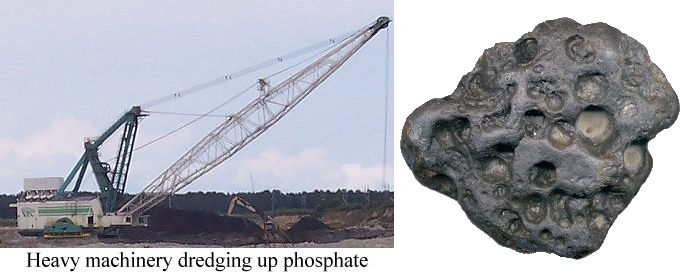
Mining for Phosphate and an image of a a 6 inch Phosphate pebble from the mine.
YOUTUBE VIDEO
This video shows the draglines in action digging through the Yorktown and Pungo River Formations in order to get to the phosphate bed.
Fossil Identification for Aurora, North Carolina and Surrounding Areas:
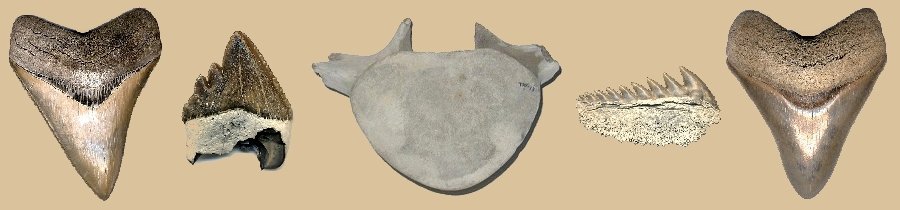
If you plan on collecting around Aurora or the North Carolina Coasts and need fossils identified, this is your place, click the image below for the Fossil Identification section.
Fossil Collecting Locations at Aurora, NC and the North Carolina Coast
Please Note: The Nutrien mine is CLOSED to fossil collecting. Please DO NOT call the mine or museum asking to fossil collect.
1. The Aurora Fossil Museum:
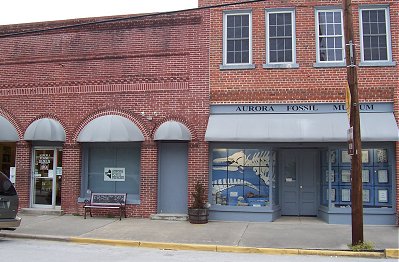
Aurora Fossil Museum
Before you collect these tertiary fossils, I highly recommend a visit first to the Aurora Fossil Museum. There you can see the type of fossils to look for, and even fossil hunt at their spoil pile across the street from the museum.
The Tailings at the Museum:
The Aurora Fossil Museum has spoil piles (of Pungo River tailings)right across the street at thier Fossil Park for visitors look through and collect fossils.
This is a great spot to search for fossil shark teeth. It's also very family friendly. They also have a picnic area next to the piles.
If you fossil collect at the Fossil Park, make sure your screen is no larger than 12" x 12" with a maximum mesh size of 1/4".
2. Emerald Isle and Topsail Beach, North Carolina
Myrtle Beach area, South Carolina
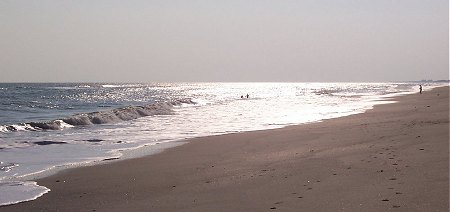
Emerald Isle shark tooth collecting
These beaches have Miocene and Pliocene rock outcroppings on the shelf offshore.
Water erodes this outcropping, setting fossil shark teeth free. Eventually they wash ashore.
Although the large fossils rarely wash ashore, small ones are common.
Search the shell areas near the surf. Be patient and go through scoop after scoop.
You'll eventually find the fossil shark teeth.
The teeth from these beaches are from the same type of sharks as at Aurora, so the identifications
will be the same.
The fossils are usually black with some streaks of other dark colors.
The black is from phosphate minerals replacing the original material. Black bone fragments are sometimes found as well.
TIPS:
1. It's best to collect after there has been a storm, as larger fossils will wash up.
2. Fossil hunting is better when they replenish the beach sand because they bring the sand from near the offshore formations. Every few years they do a beach
replenishment program at various sections of beach and shark tooth hunting is be much better.
Recommended Equipment
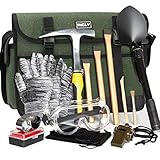
The only fossil equipment you need to drastically increase your finds is either a shovel and sifter, or one of those
sifter/shovel combos.
Also remember, if you are sifting in the mine material at the museum, the sifter can be no larger than
12" x 12" with a maximum mesh size of 1/4".


This is a light weight all in one sifter, you scoop, shake, and flip to sift. It's really convenient!
10" Shark Tooth Sifter (Tri Star)
They also sell a smaller 7" version.


This is a nice sifter that has a 1/4" screen size. Smaller sizes are available. It's lightweight and easy to carry. The diameter of the top is 13.25" and the screen diameter a little smaller. It works for the Aurora Museum fossil piles, as the sifting area is slightly smaller than a 12x12" screen.
Recommended Carolina Shark Tooth Books and Items:

Shark Tooth Hunting on the Carolina Coast
Ashley Oliphant, 2015
This informative guide not only serves as a valuable reference with beautiful color photos for comparing finds, but also incorporates the author's collecting experiences. While suitable for beginners, avid hunters may seek a more in-depth reference. It iswell-written and well-illustrated and particularly helpful in identifying shark teeth.


Seal/Dolphin ~ Phoca/Stenella: A Skeletal Comparison of Two Marine Mammals
by John R. Timmerman, 1997
This is a very good book if you want to attempt to identify the numerous bone fragments encountered at this site.
This book can be purchased through the North Carolina Fossil Club - When at their website, click on the publications tab.
Get Your Very Own Megalodon Tooth:
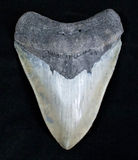
These are Authentic Megalodon teeth sold by Fossil Era , a reputable fossil dealer (that I personally know) who turned his fossil passion into a business. His Megalodon teeth come in all sizes and prices, from small and inexpensive to large muesum quality teeth. Each tooth has a detailed descriptions and images that include its collecting location and formation. If you are looking for a megalodon tooth, browse through these selections!