



Cretasquatina americana: The Cretaceous Angel Shark
Cretasquatina americana was an unusual angel shark that swam in the shallow seas of North America during the Late Cretaceous. We know it from rare pieces of its skeleton, including six associated vertebrae and jaw cartilage from Alabama. A fossil I found in New Jersey helped show that the genus reached much farther north.
Key Points: In 2020, paleontologists John G. Maisey, Dana J. Ehret, and John S. S. Denton described a new genus and species of extinct angel shark, Cretasquatina americana, based on fossils from Alabama. The official type specimen, or holotype, is ALMNH 2792. Their study also included a fossil vertebra discovered in New Jersey by Jayson Kowinsky (The Fossilguy). This specimen, cataloged as AMNH FF 22425, was identified as Cretasquatina sp. indet. Although its exact species could not be determined, the discovery extended the known geographic range of the genus northward into New Jersey.
Maisey, Ehret & Denton, 2020
Campanian, for Alabama type fossils
Alabama Museum of Natural History
What Was Cretasquatina americana?
Cretasquatina was a shark in the angel shark family, Squatinidae. Living angel sharks belong to the genus Squatina. Living angel sharks are unusual sharks with flattened bodies and broad fins, spending much of their time on the seafloor. They are bottom-dwelling ambush predators. The Cretasquatina specimen from Alabama shows it may have had a length somewhere between a helf meter to a meter long (2 or 3 feet).
The uniqueness of Cretasquatina americana comes from the anatomy of its jaws, cartilage, and the first few vertebrae just behind the skull. Those fossils preserve enough detail to identify an angel shark quite different from living species and other fossil relatives.
Fast Facts About Cretasquatina
Classification: Chondrichthyes › Elasmobranchii › Squatiniformes › Squatinidae.
Named: 2020 by Maisey, Ehret and Denton.
Genus name: Creta (Latin: chalk) + Squatina (Latin name used for angel sharks).
Species name: americana derives from the Latinized name Amerigo.
Holotype: ALMNH 2792 from the Mooreville Chalk, Alabama.
New Jersey Discovery: Fossil vertebra AMNH FF 22425, discovered by Jayson Kowinsky (The Fossilguy) in New Jersey. Identified as Cretasquatina sp. indet., this specimen extended the known geographic range of the genus northward into New Jersey.
Estimated size: Alabama specimens indicate animals of more than roughly 0.5 to more than 1 meter in total length.
Known teeth: No teeth were definitively identified as belonging to Cretasquatina in the 2020 study.
Discovery: A New Angel Shark Hidden in Museum Collections
The story starts at the Harrell Station Paleontological Site near Marion Junction in Dallas County, Alabama. Researchers and museum crews collected unusual fragments of fossilized cartilage there over a period of years. The study lists one lot collected in 1988 (ALMNH 1040) and another in 1992 (ALMNH 2792).
At first, some of the material was thought to belong to Ischyrhiza, a sawfish-like cartilaginous fish already known from the area. But a closer look changed that. The jaw anatomy and unusual vertebrae had the features of an angel shark, not a sawfish-like ray. They also differed from the living genus Squatina and the extinct Jurassic angel shark Pseudorhina.
In a paper published on June 16, 2020, Maisey and his colleagues formally described the fossils as a new genus and species: Cretasquatina americana. Rather than being based on isolated shark teeth, the name rested on exceptionally informative, three-dimensional skeletal remains. That makes this fossil particularly valuable for understanding the history of angel sharks.
The Type Specimen: Alabama's Cretasquatina americana
When scientists name a new species, they designate a holotype: a particular specimen that permanently anchors the species name. For Cretasquatina americana, the holotype is ALMNH 2792 in the Alabama Museum of Natural History. It came from the early Campanian Mooreville Chalk at Harrell Station, Alabama.
What Parts of the Shark Were Found?
Holotype: ALMNH 2792
- 2792-C: Six associated anterior vertebrae, forming a remarkable front section of the backbone
- 2792-A: Nearly complete left palatoquadrate, an upper-jaw cartilage about 125 mm long
- 2792-B: Much of a ceratohyal, a cartilage associated with the hyoid region
- 2792-D: Small braincase-cartilage fragment
- Additional small fragments of mineralized cartilage
Referred Alabama material: ALMNH 1040
This other fossil lot includes upper-jaw cartilage, incomplete vertebrae, and fragments of calcified cartilage. It appears to represent a different individual rather than part of the holotype animal.
Collected: 1988
Formation: Mooreville Chalk, Alabama
The researchers used these additional bones to compare anatomical details and better understand the new species.
The Holotype: Six Fossil Vertebrae from Alabama

The six vertebrae form the front portion of the shark's backbone. Their unusual structure was central to the description of the new genus and species.
More views in the paper: Figure 3 (page 8) shows close-up views of the first holotype vertebra, and Figure 7 (page 13) shows the upper-jaw cartilage. The figure above is reproduced from the BHL digitized publication, which carries a CC BY-NC-SA 4.0 license for noncommercial use.
What Made Cretasquatina Different?
1. An Unusual First Vertebra
The first vertebrae were the strongest clues. In Cretasquatina, the front of the first vertebral centrum (its main spool-like body) is reduced and enclosed by surrounding calcified cartilage. It does not extend all the way forward to the skull in the way it does in modern Squatina. Large paired articular surfaces helped join the neck region to the back of the skull.
The expanded cartilage structures attached to the first two vertebrae also had a distinctive shape. The first pair curved backward around the second. These details helped distinguish Cretasquatina from other angel sharks even though most of the body was missing.
2. Thick, Tile-like Mineralized Cartilage
Shark skeletons consist mainly of cartilage rather than true bone, but some of that cartilage can become mineralized. In Cretasquatina, the hardened outer layer contains unusually large tile-like units called tesserae. In many parts of the Alabama fossils, individual tiles are about 2–3 mm across or more, considerably coarser than is usual in modern sharks.
That thick, mineralized cartilage may be part of the reason these rare skeletal fossils survived. It also preserves details that scientists can compare across groups of sharks.
3. Distinctive Upper-Jaw Cartilage
The fossil upper jaw, or palatoquadrate, differs from those of modern angel sharks in the shapes and positions of some of its processes. The best-preserved jaw cartilage is about 125 mm long. Its tooth-bearing groove has a scalloped pattern, although no actual teeth were found attached to it.
What about the teeth? The 2020 authors could not definitively assign any teeth to this genus. Some isolated Late Cretaceous teeth previously called Squatina hassei might belong to Cretasquatina, but that remains unproven. For now, identifying this species from an isolated tooth alone would be speculative.
The New Jersey Discovery: My Fossil in the Research Paper
My connection to this shark started with an odd fossil vertebra I found while collecting at Ramanessin Brook in the Big Brook area of New Jersey. I photographed it and posted it on Fossilguy.com. Dr. John G. Maisey, Curator Emeritus at the American Museum of Natural History, noticed the fossil and contacted me because he was studying the unusual Alabama angel shark material.
After we corresponded, I made a cast of the vertebra for myself and donated the original specimen to the American Museum of Natural History. It is now cataloged as AMNH FF 22425, and the authors featured it in Figure 5 of the 2020 publication.
My Fossil in the Scientific Publication: Figure 5

This is the New Jersey specimen (AMNH FF 22425) discovered by Jayson Kowinsky (The Fossilguy), referred to Cretasquatina sp. indet., not the Alabama holotype.
Why the New Jersey Vertebra Mattered
Two important features matched those of the Alabama material: the main centrum does not reach the vertebra's front face, and the surrounding cartilages form broad, paired articular depressions. That was enough for the researchers to place my fossil in the genus Cretasquatina.
There is an important distinction, however. The paper records AMNH FF 22425 as Cretasquatina sp. indet. (“species undetermined”). This is not the holotype of Cretasquatina americana, and the authors did not establish that the Alabama and New Jersey specimens belong to the same species. The New Jersey specimen documents the genus farther north.
Another scientific detail: My vertebra came from a reworked stream deposit rather than its original rock layer. The authors could not determine whether it came from the Mount Laurel or Navesink Formation, so its precise stratigraphic age remains uncertain. They list the Ramanessin Brook record as Late Cretaceous.
For the fuller personal story and my complete six-question interview with Dr. Maisey, see my article about the importance of amateur contributions to paleontology.
Are There Two Angel Sharks at Big Brook?
For years, isolated Late Cretaceous angel shark teeth from the Big Brook and Ramanessin Brook area of New Jersey have been identified as Squatina hassei. But now there's another name in the local fossil record. A vertebra I discovered in New Jersey, AMNH FF 22425, was identified as Cretasquatina sp. indet.
Here's the catch for fossil hunters: no teeth have been confidently identified as Cretasquatina. In their 2020 paper, Maisey and colleagues pointed out that some North American teeth previously assigned to Squatina hassei could actually belong to Cretasquatina.
There's another complication: the identity of Squatina hassei itself has been questioned. Siversson and colleagues (2016) considered it a nomen dubium, or doubtful name, because the original fossil teeth from Europe are too poorly preserved to reliably distinguish the species. Although the name is still used, its identification remains uncertain.
So were there two angel sharks at Big Brook? Possibly, but we don't know for sure. We now have evidence that Cretasquatina lived in the region, so it's reasonable to expect that its teeth may be among the fossils found in these brooks. We also know that the identity of S. hassei has been called into question.
That raises an interesting question: Could some, or even all, of the angel shark teeth traditionally identified as S. hassei actually belong to Cretasquatina? Or was there another angel shark living in these waters as well?
Until we find diagnostic teeth associated with skeletal remains, we simply can't say how many angel shark species lived here or which species those isolated teeth belong to.
Where Did Cretasquatina Live?
The Alabama fossils came from the Mooreville Chalk, deposited in a shallow marine setting along the eastern side of the Mississippi Embayment. The New Jersey fossil was found in deposits associated with the Atlantic coastal shelf. Both areas were part of North America's extensive Late Cretaceous seas.
The 2020 paper documented Cretasquatina from Alabama and New Jersey. Those two localities are hundreds of miles apart and show that the genus occupied a substantial stretch of North America. The authors discussed the possibility of an even broader range along the Atlantic coast.
Evolution: How Was Cretasquatina Related to Other Angel Sharks?
The family Squatinidae includes modern angel sharks (Squatina) and several extinct relatives. The paper compared Cretasquatina with both the Jurassic genus Pseudorhina and other Cretaceous material. Its preliminary evolutionary analysis placed Cretasquatina on the stem lineage of angel sharks, closer to modern Squatina than to Pseudorhina.
Another interesting result from the research is the connection between the skull and backbone. Some features of that joint resemble those in skates and rays. The authors argued that these similarities evolved independently in the two lineages rather than demonstrating that angel sharks are especially close relatives of rays.
Swipe →
| Material | Identification | What it tells us |
|---|---|---|
| ALMNH 2792 Alabama | Holotype of C. americana | Defines the new species and preserves six front vertebrae with associated jaw and other cartilage |
| ALMNH 1040 Alabama | Referred C. americana material | Adds jaw and vertebral fossils from a second individual |
| AMNH FF 22425 New Jersey | Cretasquatina sp. indet. | Supports occurrence of the genus farther north; the species cannot be confirmed |
Photos of the Cretasquatina Fossil
These are photographs from my New Jersey specimen and the cast I made before donating the original to the museum. The fossil pictured here is the actual specimen used in the publication.
Original Photos: The Fossil and Its Cast


The Original 2020 Research Publication
Maisey, John G., Dana J. Ehret, and John S. S. Denton (2020). “A New Genus of Late Cretaceous Angel Shark (Elasmobranchii; Squatinidae), with Comments on Squatinid Phylogeny.” American Museum Novitates, no. 3954, pp. 1–29. Published June 16, 2020.
Read the scientific article (DOI: 10.1206/3954.1) · Biodiversity Heritage Library copy and rights information.
Figures shown above: Figure 2 (page 7), the holotype's six vertebrae, and Figure 5 (page 10), my New Jersey vertebra. The original paper also includes Figure 3 (page 8), a close-up of the holotype's first vertebra, and Figure 7 (page 13), its upper-jaw cartilage.
Image credits and rights: Figures 2 and 5 are from Maisey, Ehret & Denton (2020), © American Museum of Natural History. The BHL digitization identifies the American Museum of Natural History Library as rights holder and carries CC BY-NC-SA 4.0 (attribution, noncommercial reuse, and share-alike for adaptations). For commercial reuse, contact the rights holder. Fossil photographs credited to Jayson Kowinsky are licensed separately by Fossilguy.com.
Frequently Asked Questions About Cretasquatina
What was Cretasquatina americana?
Cretasquatina americana was an extinct Late Cretaceous angel shark named by Maisey, Ehret and Denton in 2020. It belongs to the shark family Squatinidae and is known from fossilized cartilaginous skeletal elements in Alabama.
Where was the type specimen of Cretasquatina americana discovered?
The holotype, ALMNH 2792, came from the early Campanian Mooreville Chalk at the Harrell Station Paleontological Site in Dallas County, Alabama. It includes six associated front vertebrae, a jaw element, part of a hyoid element, and other calcified cartilage.
Was the New Jersey specimen identified as Cretasquatina americana?
No. The New Jersey first vertebra, AMNH FF 22425, was referred to Cretasquatina sp. indet., meaning it could be identified to the genus but not confidently to the species Cretasquatina americana.
How big was Cretasquatina americana?
Based on comparisons with skeletal elements of living angel sharks, the Alabama material represents animals estimated to have been more than roughly half a meter to more than one meter long. This is a comparative estimate, not a measurement of a complete fossil skeleton.
Have Cretasquatina teeth been found?
No teeth could be confidently assigned to Cretasquatina in the 2020 description. Angel shark teeth from New Jersey’s Big Brook area have been identified as Squatina hassei, but some might belong to Cretasquatina. For now, an isolated tooth cannot reliably distinguish the two genera.
Where did Cretasquatina live?
Confirmed genus-level skeletal evidence described in the 2020 study came from marine deposits in Alabama and New Jersey. The precise species-level identity of the New Jersey fossil is unresolved, so the geographic range of C. americana itself is less certain.
Why was the New Jersey fossil important?
The vertebra shared distinctive features with Alabama Cretasquatina material and was included as Figure 5 in the 2020 paper. Its discovery helped document the genus much farther north than the Alabama type locality.
Is Cretasquatina the same shark as a modern angel shark?
It is an extinct relative in the same family, Squatinidae, but not the living genus Squatina. No complete body fossil of Cretasquatina was described, so its exact external appearance remains unknown.
More Fossilguy Shark and Fossil Guides
My Cretasquatina DiscoveryHow a fossil collector helped with a peer-reviewed shark study, plus an interview with Dr. Maisey.
 Big Brook Fossil GuideLearn about the Cretaceous New Jersey fossil locality where I found the vertebra.
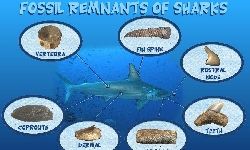 Shark Fossils Beyond TeethLearn what parts of a shark skeleton can fossilize besides its teeth.
 Shark GalleryExplore the shark fossil guides, extinct species and shark evolution.