



This news article is based on a new Current Biology study led by Jingmai O'Connor and colleagues, along with the related Field Museum press release: A fossil feather preserved inside dinosaur poop could help explain why birds survived the mass extinction.
Summary points about the tyrannosaur poop feather study:
- Age: Latest Cretaceous, about 66 million years old
- Location: Hell Creek Formation, northeastern Montana
- Specimen: A small coprolite, probably produced by a large meat-eating dinosaur
- Likely predator: Possibly Tyrannosaurus rex or Nanotyrannus
- Likely prey: A hesperornithiform, an extinct aquatic diving bird
- Preserved contents: Multiple feathers, bird leg bones, and tiny gar fish scales
- Why it matters: These are the first hesperornithiform feathers ever found
- Bigger picture: The feather types may help explain why modern-bird ancestors survived the asteroid aftermath while other birds died out
Introduction: A Dinosaur Ate a Bird, and the Poop Kept the Evidence
Here is a sentence I never thought I would write: a dinosaur turd may hold one of the most important bird feathers ever found.
In a new study, researchers report a remarkably preserved feather inside fossilized dinosaur feces, also called a coprolite. The specimen also contains bird bones and tiny fish scales. Put together, the clues suggest that a large meat-eating dinosaur ate an ancient diving bird and later left behind a very informative pile of evidence.
The fossil is exciting for two reasons. First, it records a predator-prey interaction from the very end of the Age of Dinosaurs. Second, the feather itself may help explain why the ancestors of modern birds survived the mass extinction 66 million years ago while many other birds did not.
Found in Montana, Recognized a Decade Later
The story begins in 2016 in the Hell Creek Formation of northeastern Montana. Co-author David DeMar Jr. spotted a dark reddish-brown nodule about half the size of a golf ball while collecting fossils in the field. Looking closely with a hand lens, he noticed something surprising sticking out of it: a tiny fossil feather.
That alone would have been remarkable. Feathers are rare in the Hell Creek Formation, even after more than a century of collecting. But the real surprise came later, when the team examined the specimen in the lab.
Using CT scanning, which builds a three-dimensional image from many X-rays, the researchers discovered that the little nodule held much more than a single exposed feather. It contained additional feathers, tiny fish scales, and bird leg bones.
Why Scientists Think It Was Dinosaur Poop
The researchers interpret the specimen as a coprolite from a large carnivorous dinosaur. In plain English, they think it is fossilized poop from a meat-eater.
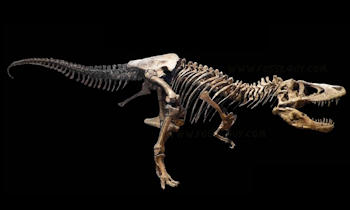
The study does not claim absolute certainty about which predator produced it, but Jingmai O'Connor suggests that Tyrannosaurus rex or Nanotyrannus are the most likely candidates. Either way, the producer was probably a large theropod living near the very end of the Cretaceous.
That makes the specimen a rare trace fossil that preserves both feeding behavior and soft tissue information. The predator itself is gone, but its digestive leftovers still tell a story.
The Victim Was Probably a Diving Bird
The feathers and bones appear to come from the same prey animal. Based on the leg bones and the feather features, the researchers conclude that the prey was probably a hesperornithiform.
Hesperornithiforms were an extinct group of aquatic birds. Many were foot-propelled divers, meaning they swam underwater using their legs rather than their wings. Ecologically, they were a bit like modern loons or grebes.
The fish scales in the coprolite likely came from the bird's own last meal. In other words, the predator may have eaten a fish-eating bird, and the coprolite preserved traces of both the prey and the prey's prey.

Why These Feathers Matter So Much
According to the Field Museum release, these are the first hesperornithiform feathers ever found. That matters because hesperornithiforms are close relatives of the bird branch that includes living birds, but they were not part of that surviving lineage themselves.
The preserved feathers seem to show a mix of features. Some were more modern-looking and adapted for a life in the water. Others were smaller, fuzzier, and more primitive in appearance.
That mixed feather toolkit may turn out to be important. It suggests that hesperornithiforms had not fully reached the feather condition seen in the ancestors of modern birds.
Could Feathers Help Explain Why Birds Survived?
One of the big mysteries in paleontology is why only one branch of birds survived the asteroid impact at the end of the Cretaceous. That surviving branch is called Neornithes, and every living bird today belongs to it.
Some scientists have suggested that living near water may have helped certain bird groups survive. But hesperornithiforms also lived near water, and they still went extinct. So habitat alone does not seem to be the whole answer.
O'Connor and colleagues suggest that feathers, and possibly the way birds molted those feathers, may have been part of the difference. If hesperornithiforms had body feathers that were less effective at insulating them than the feathers of early Neornithes, that could have mattered during the cold, dark conditions that followed the asteroid impact.
The idea is simple: if some birds had warmer, more efficient plumage, they may have been better equipped to survive the so-called impact winter. This coprolite does not solve that mystery on its own, but it adds an important new clue.
A New Reason to CT Scan Coprolites
Coprolites already tell paleontologists a lot about diet. They can preserve bone fragments, fish scales, shells, and plant tissues. This specimen shows they may sometimes preserve delicate soft tissues in surprising detail as well.
That is part of what makes this discovery so fun. A little piece of fossil poop turned out to preserve behavior, anatomy, and evolutionary clues all at once.
It also suggests there may be other overlooked coprolites in museum collections or field sites that deserve another look. If scientists start scanning more fossil feces, they may find that ancient digestive leftovers are even more useful than we thought.
So yes, this story begins with dinosaur poop. But it ends with a serious scientific point: sometimes the strangest fossils preserve the most valuable clues.
Source and Journal Reference
Primary source for this news article: Field Museum. (2026, September 10). A fossil feather preserved inside dinosaur poop could help explain why birds survived the mass extinction. https://www.fieldmuseum.org/about/press/fossil-feather-preserved-inside-dinosaur-poop-could-help-explain-why-birds-surv
Related journal paper: O'Connor, J. K., DeMar Jr., D., Carroll, N., Chin, K., Holland, M., Clark, A., Cooper, C., Kuo, P.-C., Tobin, T., Celestian, A., Bottjer, D., Chiappe, L., & Wilson Mantilla, G. (2026). Current Biology. Cell Press article identifier: S0960-9822(26)01105-X. Abstract page.
Image credits: The fossil feather image is credited to O'Connor et al., and the tyrannosaur preying on the ancient diving bird illustration is credited to Andrey Atuchin. A separate field photograph of the coprolite at the time of discovery is credited to David DeMar Jr.
FAQs: Feather Found in Dinosaur Poop
Quick answers about the feather, the coprolite, the likely tyrannosaur predator, and what this fossil may reveal about bird survival at the end of the Cretaceous.
-
How old is the feather found in dinosaur poop?
The feather comes from the latest Cretaceous, about 66 million years ago, just before the end-Cretaceous mass extinction.
See: Introduction -
Where was the coprolite found?
It was found in the Hell Creek Formation of northeastern Montana during fieldwork in 2016.
See: Found in Montana
-
What dinosaur probably produced the coprolite?
The researchers think it was produced by a large meat-eating dinosaur, with Tyrannosaurus rex or Nanotyrannus suggested as the most likely candidates. -
What animal did the feather come from?
The bones and feathers most likely came from a hesperornithiform, an extinct group of aquatic diving birds. -
What is a hesperornithiform?
Hesperornithiforms were toothed diving birds from the Cretaceous. Many were foot-propelled swimmers that filled a role somewhat similar to modern loons or grebes. -
What else was inside the coprolite?
In addition to multiple feathers, the coprolite contained tiny gar fish scales and bird leg bones. -
Why is this fossil important?
It preserves exceptionally detailed bird feathers from the age of dinosaurs and gives scientists new information about bird feather evolution and predator-prey interactions. -
Why could this help explain why modern birds survived?
The preserved feathers suggest hesperornithiforms retained some more primitive feather types. If those feathers were less effective at insulation than the feathers of early Neornithes, that difference may have mattered during the cooling that followed the asteroid impact. -
What is Neornithes?
Neornithes is the branch of birds that includes the common ancestor of all living birds and all of its descendants. -
Why is fossil poop useful in paleontology?
Coprolites can preserve diet, behavior, and even soft tissues. In this case, the coprolite preserved feathers, bones, and scales that reveal both what the predator ate and what the prey bird may have looked like.
Jump to Sections
Key Facts | Introduction | Discovery | Why It Is Poop | The Prey Bird | Why the Feathers Matter | Bird Survival Mystery | Why Coprolites Matter | Source and Journal Reference | FAQs