


Paleontology News
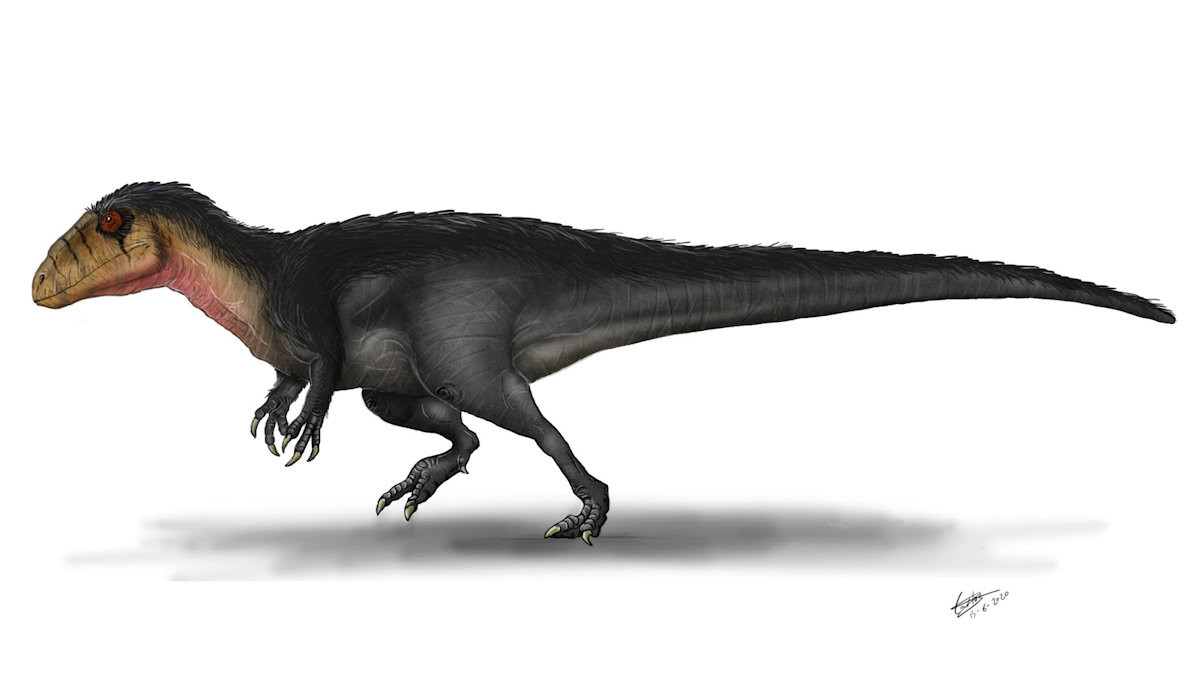
Reconstruction of the life aspect of Lusovenator santosi (Author: Carlos de Miguel Chaves for the GBE)
A new species of theropod dinosaur found in Portugal pushes back the date of carcharodontosaurids in Europe by 20 million years.
Summary Points
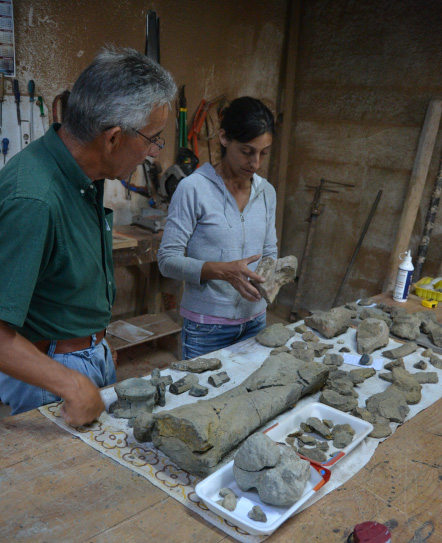
The discoverer of the remains, Joaquim dos Santos, together with Elisabete Malafaia (UL-GBE)
A paleontologist team led by Elisabete Malafaia identified a new species of carnivorous dinosaur in the Upper Jurassic of Portugal.
Lusovenator santosi: The genus name Lusovenator means Hunter from Lusitania. The species name santosi is a tribute to an amateur paleontologist who has discovered a large number of dinosaur sites throughout Portugal.
Lusovenator santosi is the earliest occurrence of carcharodonstosaurid dinosaurs in Europe.
The fossils were collected over the past 20 years from beaches in the Lusitanian Basin along the Portuguese coast

This News Article is based on the Universidad Nacional de Educacion a Distancia (UNED Press Release) - July 10, 2020
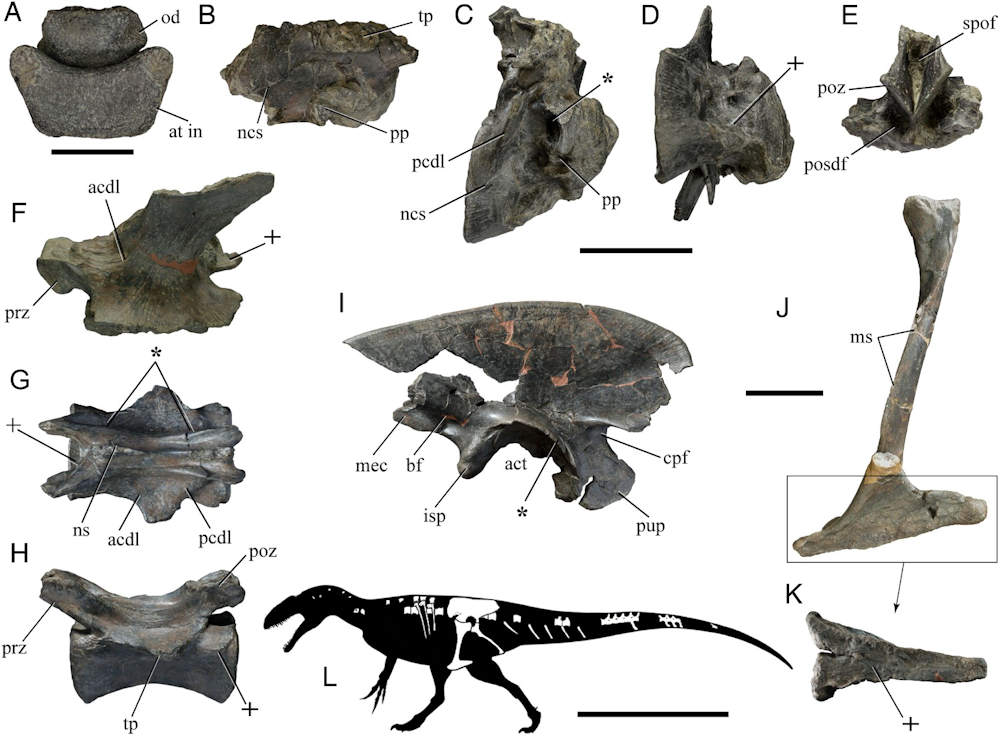
Figure 1 from (Malafaia et al., 2020)showing selected skeletal remains of the new species Lusovenator santosi - specimen SHN. 036.
A paleontologist team led by Elisabete Malafaia identified a new species of carnivorous dinosaur in the Upper Jurassic of Portugal. The new species called Lusovenator santosi is based on fossils collected over the past 20 years from beaches in the Lusitanian Basin along the Portuguese coast. This new species of lived between 146 and 153 million years ago and was around 3.5 meters in length.
Initially the fossils were thought to be from the well-known Jurassic theropod called Allosaurus, however this more detailed study shows they are from a group of dinosaurs called carcharodontosaurids.
Carcharodontosaurids are a group of carnivorous theropod dinosaurs. In the Cretaceous, they became some of the largest predators on the planet. A well-known carcharodontosaurus is Carcharodontosaurus saharicus from the Kem Kem beds of Morrocco. This large theropod is similar in size to T. rex. Another well-known carcharodontosaurus is Gigantosaurus carolinii of South America which is the largest theropod dinosaur yet found.
Previously, the oldest known carcharodontosaurid fossils came from Tanzania in Africa from the Upper Jurassic. This new species from Portugal is the same age as the Tanzania specimens and constitutes the first evidence of carcarodontosaurids in the Upper Jurassic of the northern hemisphere.
This is the first time a carcharodontosaurus this old was found in the northern hemisphere. This new research shows carcharodonsotaurids were present in the Iberian Peninsula at least 20 million years earlier than previously thought. This has many implications to the evolution of the dinosaurs and ecosystems in not just the Iberian Peninsula but how and when they migrated between Europe and North America.
Until this discovery, the Upper Jurassic theropod fauna of Portugal consisted of closely related dinosaurs species from the Morrison Formation of North America, such as Ceratosaurus, Torvosaurus, and Allosaurus. Carcharodontosaurs are not found in North America until the Lower Cretaceous.
The name Lusovenator, means hunter from Lusitania. The species name is a tribute to Jose Joaquim Dos Santos, an amateur paleontologist who has discovered a large number of dinosaur and other fossil sites throughout Portugal.
A detailed description of the fossils were published in the Journal of Vertebrate Paleontology.
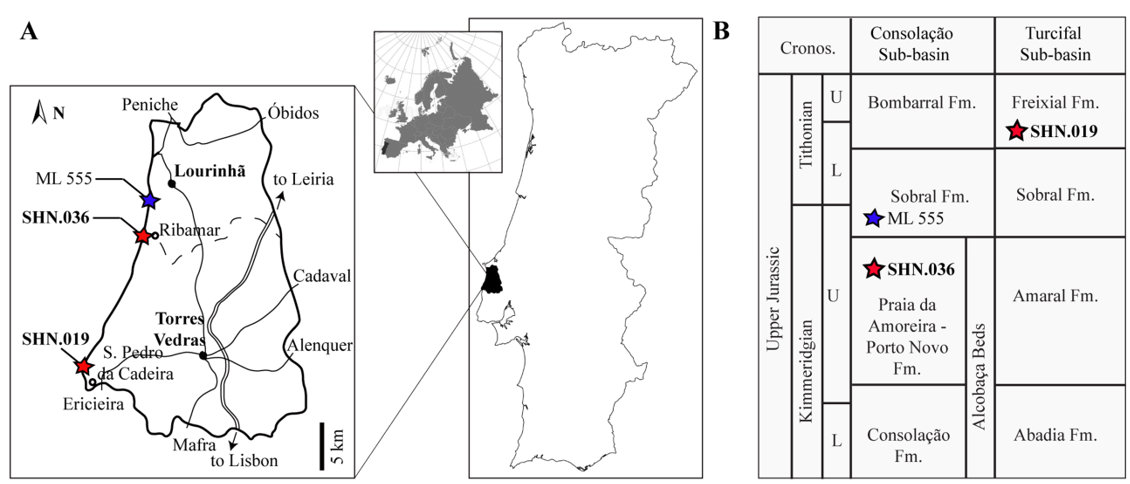
Figure S1A and S1B from (Malafaia et al., 2020)showing the locations of the new dinosaur and the ages of the fossils. SHN 036 and SHN 019 are specimens of Lusovenator santosi.
This Article is Based on a Press Release Provided by: UNED
The Full Journal Article is Available Here:
Elisabete Malafaia, Pedro Mocho, Fernando Escaso & Francisco Ortega. (2020) A new carcharodontosaurian theropod from the Lusitanian Basin: evidence of allosauroid sympatry in the European Late Jurassic, Journal of Vertebrate Paleontology, DOI: 10.1080/02724634.2020.1768106.
Recommended Dinosaur Books and Educational Items:

The Rise and Fall of the Dinosaurs: A New History of a Lost World
Steve Brusatte, 2019
This dinosaur book is light-hearted and easy to read. The author, a renowned Paleontologist, does a great job at engaging the reader. It is packed with details without being overwhelming. Check out the reviews; it's a great new dinosaur book! Available in Kindle, Paper, and Audio.


Dinosaurs Rediscovered: The Scientific Revolution in Paleontology
Michael J. Benton, 2019
This is a great general book on dinosaurs. It's up-to-date and goes over the new discoveries over the last 20 years that has completely changed our views on dinosaurs. The book is broken up into easy chapters that goes over their colors, speeds, bite force, child caring, and more... stuff we didn't know just years ago! Check out the reviews and the sample pages. Available in Kindle, Paper, and Audio.

Nifeliz Dinosaur Fossils Building Kit
From 8 dinosaurs to choose from, The Nifeliz Dinosaur sets are nearly 500 pieces. They are a great gift for those 12+ who enjoy solo or group building with LEGOs. Constructing these models enhances hand-eye coordination and creativity. Perfect for family or friends, It's also compatible with existing LEGO pieces, facilitating the creation of a personalized toy museum! Check out the reviews!
Browse More Paleontology News

High quality Dinosaur teeth by Fossilera