"Celebrating the Richness of Paleontology through Fossil Hunting"
Fossilguy.com field guides to fossil hunting sites, collecting locations, geology, fossil identification, and fossils commonly found at each site.
Fossil Hunting Sites: Where to Find Fossils in the U.S.
Use this guide to explore fossil hunting locations across the United States. Each site page focuses on what you can find, the geology behind the fossils, directions and access information, fossil identification, field tips, and photos from the location.
Start here: The site guides combine field observations with published geology and fossil references where available. Use the map or directory below to choose a location, then open the individual guide before planning a trip.
Field-focused guidesSee directions, site photos, local geology, common fossils, and practical collecting information.
Fossil identificationMany locations link to identification pages showing fossils that actually occur in the local formations.
Access and safetyCollecting rules, site conditions, and access can change. Always verify current regulations and permissions before visiting.
Many fossil typesExplore shark teeth, trilobites, plant fossils, brachiopods, Ice Age mammals, fossil fish, and more.
Before you go: Fossil sites change. Erosion, construction, land ownership, park rules, permits, water levels, and temporary closures can all affect access. Treat each Fossilguy page as a planning guide and confirm current conditions with the landowner, park, museum, or managing agency before traveling.
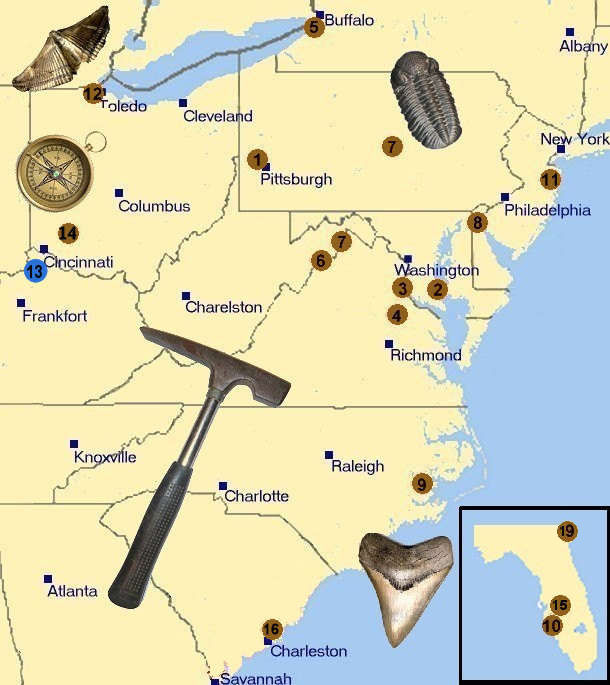
Map of Fossil Hunting Sites
Click or tap a numbered location on the map to open its fossil site guide. The individual pages include fossils commonly found there, site photos, identification help, geology, directions, and field notes.
This fossil-rich stretch of the southeastern coast preserves Oligocene through Pleistocene fossils. Shark teeth are the main attraction, including teeth from Otodus megalodon.
From Myrtle Beach toward Tybee Island, much of the searching is done by beachcombing. Guided trips are also available in parts of the region, while more experienced collectors sometimes search offshore or in blackwater rivers.
The Calvert Cliffs preserve Miocene marine fossils, especially shark teeth. Much of the searching is done along Chesapeake Bay beaches, making this one of the better-known Mid-Atlantic areas for fossil beachcombing.
This fossil-rich area near Bakersfield preserves Miocene marine fossils, especially shark teeth.
Sharktooth Hill near Bakersfield is famous for its Miocene marine fauna. The surrounding area has produced abundant shark teeth and other marine fossils, and nearby commercial collecting opportunities have allowed visitors to search fossil-bearing sediments.
The Potomac River cuts through several fossil-bearing formations. South of Washington, D.C., Paleocene deposits can yield shark teeth, shells, and other marine fossils that weather into shoreline gravel.
Aurora became famous for fossils exposed by phosphate mining. Today, visitors can search fossil-bearing material at the Aurora Fossil Museum and find shark teeth and other Miocene and Pliocene marine fossils.
The Peace River is one of Florida's classic fossil-hunting areas. Gravel bars and river sediment can contain shark teeth, marine fossils, and remains of Ice Age mammals.
Venice, Florida is famous for fossil shark teeth. Beachcombers can search the shoreline and surf, while offshore deposits are also known for larger fossil teeth.
Big Brook and nearby streams expose Cretaceous marine fossils, including shark teeth and occasional marine reptile material. Fossils weather from stream-bank formations and collect in gravel bars and shallow stream sediments.
The Caesar Creek Spillway exposes extensive Ordovician marine rocks. Common fossils include brachiopods, bryozoans, corals, and occasional trilobites. Check the current park collecting rules before visiting.
The Sylvania area is known for Devonian marine fossils, especially brachiopods and trilobites from the Silica Formation. Public collecting opportunities have changed over time, so check the current status of Fossil Park and other legal access points before visiting.
Western New York contains excellent Devonian marine rocks with brachiopods, corals, and trilobites. Creek and shale exposures can be productive, and public fossil parks in the region provide easier places to see or collect fossils where permitted.
The Pittsburgh region exposes Pennsylvanian-age Carboniferous rocks at many road cuts and natural outcrops. Plant fossils such as fern-like fronds, Calamites, lycopod bark, and other coal-forest remains occur throughout the area.
Fossil Hunting FAQs
Are all of these fossil sites still open for collecting?
No. Site access can change with land ownership, park rules, construction, erosion, permits, or temporary closures. Check the individual Fossilguy guide and confirm the current rules with the landowner or managing agency before making a trip.
What kinds of fossils can I find at these locations?
The sites cover a wide range of fossils, including shark teeth, trilobites, brachiopods, corals, fossil plants, fish, marine reptiles, and Ice Age mammals. The individual guides show the fossils associated with each location.
Do I need a permit to collect fossils?
It depends on the site. Some public locations require permits or restrict what can be collected, while other places are viewing-only. Private property requires permission. Always check the current rules for the specific location.
What should I bring fossil hunting?
Gear depends on the site. Common items include eye protection, sturdy footwear, water, a small bag or bucket, wrapping material, and simple hand tools where they are allowed. River, beach, quarry, and road-cut sites all have different needs.
How can I identify the fossils I find?
Many Fossilguy site guides link directly to identification pages showing fossils from the same formations or region. Comparing a specimen with fossils from the correct age and rock unit is much more useful than using a generic identification chart.
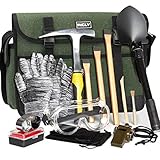
INCLY provides budget-friendly rock hounding gear, ranging from the widely favored 15-piece geology kit featured in the image to compact 4- and 5-piece sets. These tools are ideal for fossil and mineral collecting, particularly in harder matrixes and shale.
The Roadside Geology Series offers state-specific paperback books that serve as valuable mile-by-mile guides with detailed maps and illustrations. Although they do not pinpoint fossil hunting spots, these affordable books help explain regional geology. Highly recommended for fossil hunters; I've personally enjoyed the Maryland, Virginia, and Pennsylvania editions.
This is a great updated fossil sites book with at least one fossil site in each state. Each site is broken into two pages: one with detailed information such as directions, GPS coordinates, and formation information, and another with images of the site and fossils found there. It also includes fossil viewing sites such as dinosaur trackways, museums, and active excavations. Plus, my fossil photos are peppered throughout the book!
Fossilguy.com is a participant in the Amazon Services LLC Associates Program, an affiliate advertising program designed to provide a means for sites to earn advertising
fees by advertising and linking to amazon.com